Join Our FacebookGroup & Get Extra Discount!ContactBlog

news
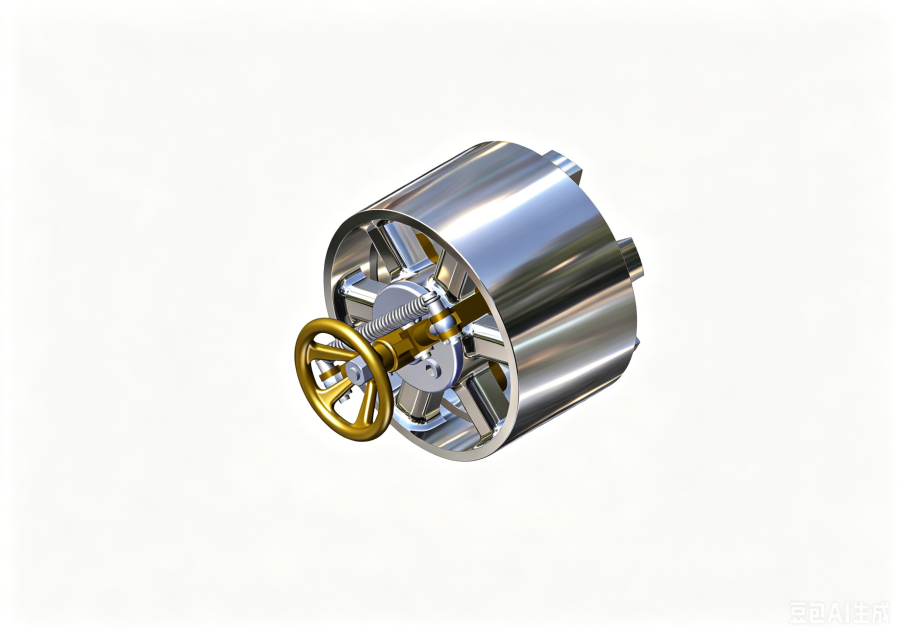
A Must-See for Mechanical Enthusiasts! A Teardown and In-Depth Analysis of the OKMO Friction Clutch Pulley
A Must-See for Mechanical Enthusiasts! A Teardown and In-Depth Analysis of the OKMO Friction Clutch Pulley
Introduction: When Models Meet Hardcore Mechanics
In the world of industrial machinery, some core components—though tucked away deep inside—rival works of art in their sophistication. Today, we aren't discussing an ordinary pulley, but a quintessential mechanical component: the Friction Clutch Pulley.
This Friction Clutch Pulley from OKMO Model does more than just faithfully replicate real-world industrial architecture; it serves as a brilliant "anatomical" lesson. Let’s explore how engineers use a collection of metal parts to solve major challenges in power transmission.
I. First Look: What Is a Friction Clutch Pulley?
Simply put, while a standard pulley transmits power in a rigid, unyielding manner, the friction clutch pulley is the "wise sage" of the pulley world.
It combines power transmission with system protection: it transmits torque via a belt just like a standard pulley, yet it can slip—using friction—if the machine jams or becomes overloaded, thereby preventing the motor from burning out. It plays an indispensable role in real-world large-scale machinery, marine propulsion systems, and even the drivetrains of high-performance sports cars.
II. In-Depth Teardown: What Makes This Transmission Logic So Brilliant?
Let’s focus on this high-quality render and see how OKMO’s engineers have constructed this miniature mechanical universe:
🔩 The "Soul" Control Handwheel (Brass Component):
The most eye-catching element is undoubtedly the golden handwheel on the left. In real machinery, this typically corresponds to a pneumatic or hydraulic control system; in this model design, it functions as a manual adjustment mechanism. By pulling or pushing it, you can precisely control the internal clamping force.
⚙️ The Core Transmission Leadscrew (Cylinder at the Center of the Handwheel):
Note the central area—that is a precision linkage (leadscrew). When the golden handwheel is pulled out or pushed in, the leadscrew undergoes precise linear displacement. This represents a classic mechanical design conversion: transforming linear motion into perpendicular action.
🟡 Radially Linked Sliders (Yellow Linkages):
Minute movements of the lead screw are amplified into radial expansion force via the internal slider mechanism. Acting like mechanical arms, these yellow linkages synchronously push the outer friction hubs outward or pull them inward.
🏗️ Friction Hubs and Tensioning Slots:
The robust outer stainless steel cylinders serve as the power hubs. Hidden within (and easily visualized, even if not fully exposed in the diagram) are friction plates mounted between these hubs. When the sliders expand the hubs, the friction surfaces are pressed together, enabling seamless power transmission; when released, the hubs retract, disengaging the power.
III. Why do engineers favor this structure?
This seemingly complex "lead screw + slider" design actually resolves several pain points found in traditional mechanical systems:
1. Stepless Tension Adjustment:
Unlike traditional designs that rely on rigid, fixed bolts, the lead screw mechanism offers incredibly fine, linear tension control. This ensures the belt maintains optimal operating tension at all times, preventing slippage or premature wear.
2. Reliable Overload Protection:
If the equipment encounters sudden resistance, the friction surfaces automatically slip. This "soft-meets-hard" characteristic effectively absorbs instantaneous shocks, preventing damage to expensive drive components.
3. Modularity and Ease of Maintenance:
The design typically allows for the rapid removal and replacement of internal friction plates, significantly reducing long-term maintenance costs.
IV. From Industrial Behemoth to Desktop Art
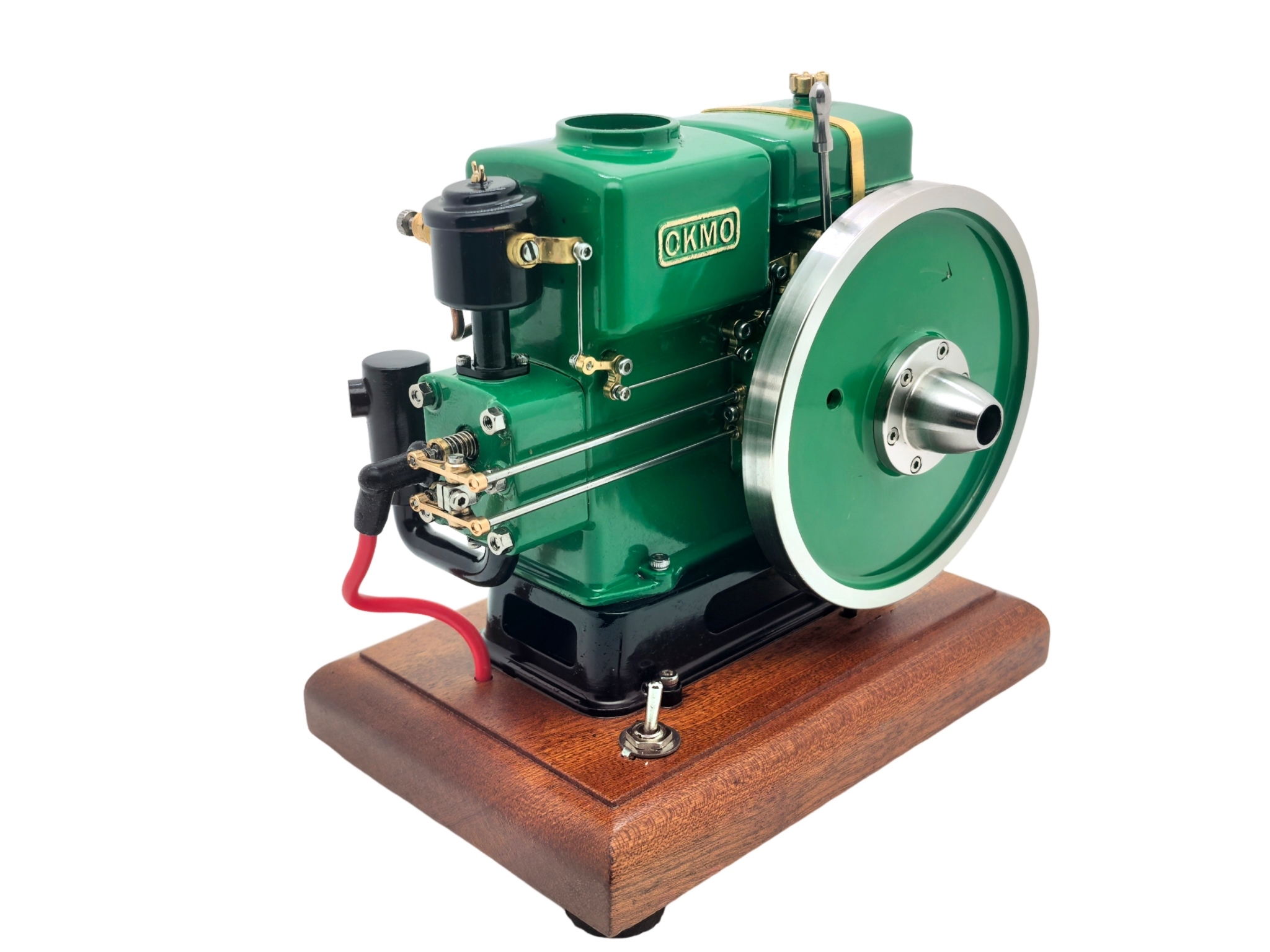
It is worth highlighting the requirements for the OKMO Model. It is not merely a static model; it is a functional clutch designed for the OKMO engine, evoking the image of a miniature Rolls-Royce engine.
For mechanical enthusiasts, it is far more than just a model. Assembling it by hand offers a deep dive into the principles of mechanical transmission. The sense of accomplishment felt when turning the golden handwheel and watching the internal linkages move in perfect unison is truly unique.
Conclusion
The charm of mechanical design often lies in these minute details: the smoothness of a lead screw, the precision of a slider, and the reliability of a friction plate. This friction clutch pulley model from OKMO offers us a glimpse into the vast world of industrial civilization.
If you’re a mechanical enthusiast, feel free to share in the comments: what is the most impressive mechanical structure you’ve ever seen?
Tags: Mechanical Aesthetics #IndustrialModel #OKMO #MechanicalPrinciples #FrictionClutch
3users like this.
新品




 USD

Your cart is currently empty.