Join Our FacebookGroup & Get Extra Discount!ContactBlog

news
A Steam Engine Model Explained
A Steam Engine Model Explained
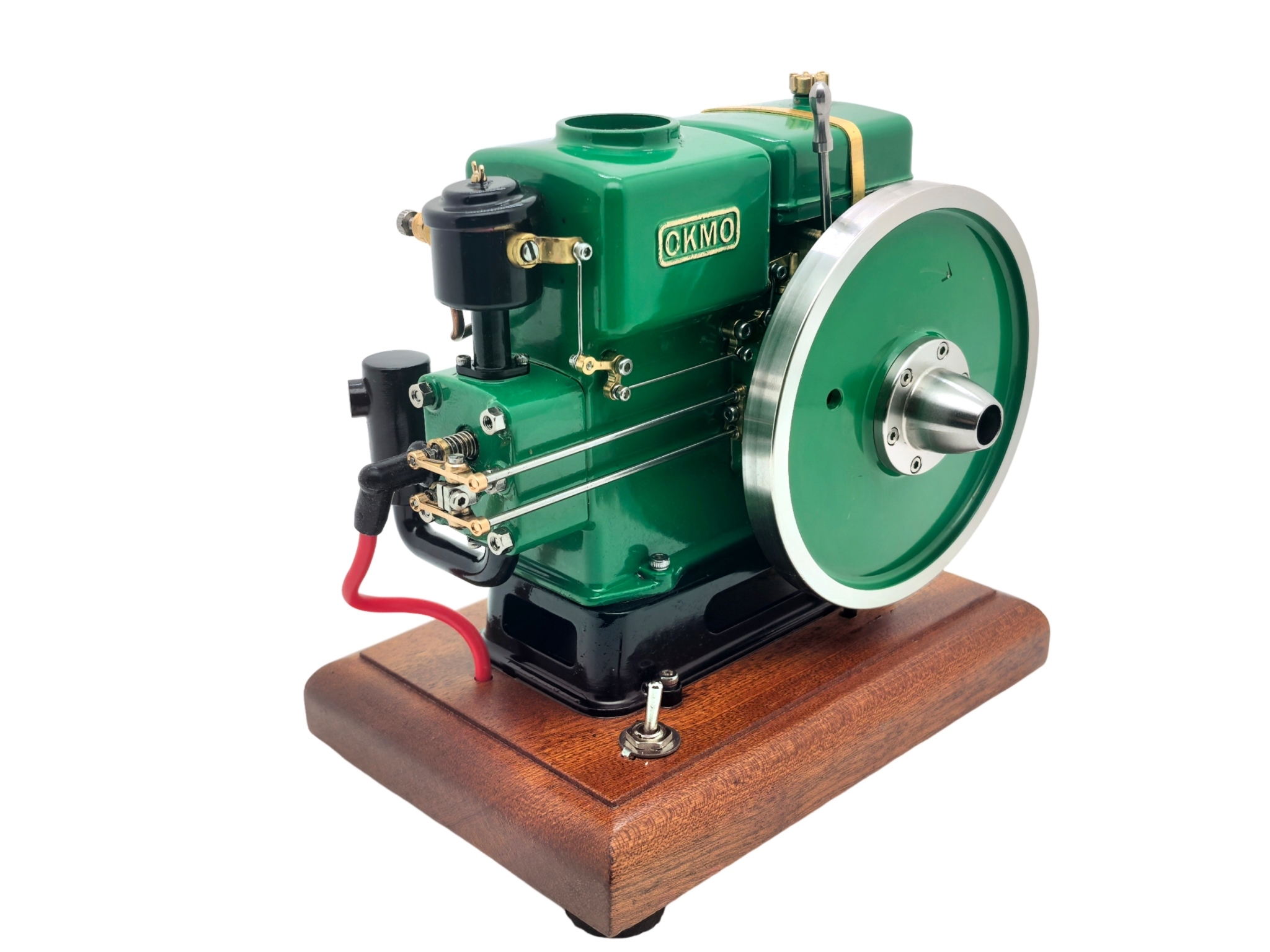
A steam engine model is a small machine that converts heat to mechanical power.steam engine model The energy is transferred by steam pressure pushing a piston in a cylinder. The piston is connected to a crank or flywheel that turns when the steam expands. This is a form of the Rankine cycle, which is the ideal thermodynamic system to generate electricity from steam. Today, steam engines are usually replaced by turbines due to lower operating costs, but the principles of the engine remain the same.
One of the earliest recorded examples of a steam-powered device was the aeolipile, described by Hero of Alexandria during the Roman Empire around the first century AD.steam engine model These were rudimentary devices and were used by inventors to demonstrate the powers of steam expansion. Later, one of the earliest industrial applications of the engine was a simple steam pump invented by Thomas Savery in 1698. He built on ideas of the fire engine by Taqi al-Din and improved the design to work with a continuously operated engine, using a cistern to store water for cooling. In addition, he introduced the concept of using condensed steam to produce a partial vacuum to pull the water upward.
The resulting power stroke was used to drive a series of pump handles like those used in medieval mine pumps.steam engine model Savery's invention was a remarkable advance, but his pump had limited practical use because it required constant attention. Another significant step forward came from an English inventor named James Watt, who designed a better engine in 1769. Watt's engine was much more reliable and could be run continuously for long periods of time. The improvement was based on the understanding of latent heat, which is the energy that is stored in a fluid at a lower temperature.
Early steam engines were usually used to power machines in factories. They consisted of a steam boiler with a cistern to hold the water, a piston in the cylinder, and a series of cranks and levers that drove the pump handles. Several variations of this basic design were developed, with some of them being able to turn shafts to generate rotary power for other equipment.
In modern times, steam engines are usually used to produce electric power for buildings or power stations. They are also still in use on railways and riverboats. They are often powered by a cylinder engine with double-acting condensing steam engines and have solar or planetary gears to provide rotary power to the engine and propellers.
Many models of the steam engine are made by various manufacturers, including Wilesco. They are popular gifts for children and adults who are fascinated by the technology. Often, the steam engine is decorated with historical scenes or figures to enhance the appeal of the model. Some models are available with a remote control to operate the engine. Other features include a safety valve and a steam whistle. They can be powered by hexamine fuel tablets, methylated spirits (aka meths or denatured alcohol), butane gas, or electrical energy. The boiler is usually fitted with a sight glass to monitor the water level.
Tags:microcosm engine
0users like this.
新品




 USD

Your cart is currently empty.